
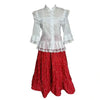
The Complete Guide to the Panamanian Pollera
, par Vivian Fong, 6 min temps de lecture
, par Vivian Fong, 6 min temps de lecture
A complete guide to the Panamanian pollera: its history, the pollera de gala vs. montuna, regional styles, accessories, and how to buy an authentic handmade pollera.

The Panamanian pollera is one of the most beautiful and intricate traditional garments in the Americas — a hand-embroidered masterpiece that can take artisans months, sometimes years, to complete. As Panama's national dress, the pollera is worn with deep pride at festivals, parades, weddings, and Independence Day celebrations across Panama and throughout the Panamanian diaspora.
Whether you're preparing for a cultural event, honoring your heritage, or simply fascinated by traditional Latin American fashion, this guide covers everything you need to know: the pollera's history, its main types, the regional styles, the accessories that complete the look, and how to buy an authentic pollera without getting a costume-quality imitation.
A pollera is a two-piece traditional dress made of a blouse-like top and a full, gathered skirt, typically crafted from white cotton or fine linen and decorated with elaborate embroidery or appliqué. The garment descends from 16th- and 17th-century Spanish dress, which Panamanian women adapted over centuries into something wholly their own.
What sets the pollera apart is the handwork. A single formal pollera can use hundreds of yards of thread, intricate lacework, and matching hair ornaments called tembleques. Because each piece is made by hand, no two polleras are exactly alike. The pollera isn't just clothing — it's a wearable expression of regional identity, family tradition, and national pride.
Polleras fall into two broad families: the formal pollera de gala and the everyday pollera montuna. Within these, regional variations abound.
The pollera de gala is the most ornate and formal version — the one most people picture. It features:
The pollera montuna is the everyday or "country" pollera — simpler, more practical, but no less charming. It usually pairs a floral-print skirt with a plain white blouse and is associated with rural and working traditions.
Different regions of Panama have their own signature polleras, including:
Browse our handmade Panamanian polleras.
A pollera is never worn alone. The full ensemble — el juego completo — includes a set of traditional accessories, each with its own name and placement:
The gold jewelry, in particular, is a hallmark of the pollera de gala and is often passed down through generations.
The pollera takes center stage during Panama's patriotic season — the November independence holidays, including the Separation from Colombia on November 3 and the first cry of independence on November 28. Its grandest showcase is the Festival Nacional de la Pollera in Las Tablas, on the Azuero Peninsula, where the country celebrates its most iconic dress each July. You'll also see the pollera at Carnival, religious processions, weddings, quinceañeras, and folkloric dance performances — both in Panama and across the diaspora.
Because polleras range from museum-grade heirlooms to mass-produced costumes, knowing what to look for protects your investment.
At VivianFongDesigns, every pollera and accessory is handcrafted by skilled artisans in Panama and shipped from the USA, so you get authentic craftsmanship without the international wait. You can learn about our Panamanian artisan roots on our story page.
A handmade pollera is an heirloom — treat it like one. Hand-wash the cotton pieces gently in cool water, or dry-clean fine embroidery, and always dry flat and away from direct sun to protect the threadwork. Iron on low on the reverse, store on a padded hanger or folded with acid-free tissue, and keep the gold jewelry and tembleques in a separate padded box. With proper care, a pollera can last for generations.
Prices vary widely with the level of handwork. Everyday montuna styles are the most affordable, while a fully embroidered pollera de gala — which can take months to make — sits at the premium end. The cost reflects the hundreds of hours of artisan labor involved.
A formal, fully hand-embroidered pollera de gala can take several months to more than a year to complete, depending on the technique and detail.
The pollera de gala is the formal, heavily embroidered version worn with full gold jewelry and tembleques. The pollera montuna is the simpler everyday style, often with a floral-print skirt and plain blouse.
They're called tembleques — handmade beaded and pearl ornaments worn in the hair that shimmer and "tremble" with movement.
Yes. Polleras are made in children's sizes and are popular for school heritage events, folkloric dance, and family celebrations.
The Panamanian pollera is far more than a dress — it's centuries of craftsmanship, regional identity, and cultural pride stitched into every thread. Whether you choose an everyday montuna or a show-stopping pollera de gala, wearing one connects you to a living tradition carried proudly across generations.
Ready to find yours? Explore our handmade Panamanian pollera collection — each piece crafted by Panamanian artisans and shipped from the USA.
Part of our guide to traditional dresses of Latin America — explore styles from every country.