
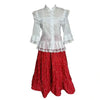
Pollera Panameña: Guía Completa del Traje Nacional de Panamá
, por Vivian Fong, 7 Tiempo mínimo de lectura
, por Vivian Fong, 7 Tiempo mínimo de lectura
Guía completa de la pollera panameña: su historia, la pollera de gala y la montuna, los estilos regionales, los accesorios y cómo comprar una pollera auténtica hecha a mano.

La pollera panameña es una de las prendas tradicionales más bellas y elaboradas de América: una obra maestra bordada a mano que puede tomarles a las artesanas meses, y a veces años, en terminar. Como traje nacional de Panamá, la pollera se luce con enorme orgullo en festivales, desfiles, bodas y celebraciones patrias, tanto en Panamá como en toda la diáspora panameña.
Ya sea que te estés preparando para un evento cultural, quieras honrar tus raíces o simplemente te fascine la moda tradicional latinoamericana, esta guía cubre todo lo que necesitas saber: la historia de la pollera, sus tipos principales, los estilos regionales, los accesorios que completan el conjunto y cómo comprar una pollera auténtica sin terminar con una imitación de disfraz.
La pollera es un vestido tradicional de dos piezas, compuesto por una camisa y una falda amplia y fruncida, confeccionado por lo general en algodón blanco o lino fino y decorado con bordados o aplicaciones muy elaboradas. La prenda desciende del vestuario español de los siglos XVI y XVII, que las mujeres panameñas fueron adaptando a lo largo de los siglos hasta convertirlo en algo completamente propio.
Lo que distingue a la pollera es el trabajo a mano. Una sola pollera de gala puede llevar cientos de metros de hilo, encajes intrincados y adornos de cabeza a juego llamados tembleques. Como cada pieza se hace a mano, no hay dos polleras exactamente iguales. La pollera no es solo ropa: es una expresión viva de identidad regional, tradición familiar y orgullo nacional.
Las polleras se dividen en dos grandes familias: la formal pollera de gala y la de uso diario, la pollera montuna. Dentro de cada una abundan las variantes regionales.
La pollera de gala es la versión más ornamentada y formal, la que la mayoría de la gente se imagina. Se caracteriza por:
La pollera montuna es la pollera de diario o "de campo": más sencilla y práctica, pero igual de encantadora. Normalmente combina una falda de tela floreada con una camisa blanca lisa, y está ligada a las tradiciones rurales y de trabajo.
Cada región de Panamá tiene su propia pollera característica, entre ellas:
Mira nuestras polleras panameñas hechas a mano.
La pollera nunca se lleva sola. El conjunto completo, el juego completo, incluye una serie de accesorios tradicionales, cada uno con su propio nombre y lugar:
La joyería de oro, en particular, es un sello de la pollera de gala y muchas veces se hereda de generación en generación.
La pollera es la protagonista durante el mes de la patria en Panamá: las fiestas de noviembre, que incluyen la Separación de Colombia el 3 de noviembre y el Primer Grito de Independencia el 28 de noviembre. Su escenario más grande es el Festival Nacional de la Pollera en Las Tablas, en la Península de Azuero, donde el país celebra su traje más emblemático cada julio. También verás la pollera en carnavales, procesiones religiosas, bodas, quinceañeras y presentaciones de danza folclórica, tanto en Panamá como en toda la diáspora.
Como hay polleras que van desde reliquias dignas de museo hasta disfraces producidos en masa, saber en qué fijarte protege tu inversión.
En VivianFongDesigns, cada pollera y cada accesorio está hecho a mano por artesanas expertas en Panamá y se envía desde Estados Unidos, así que recibes artesanía auténtica sin la espera de un envío internacional. Puedes conocer nuestras raíces artesanales panameñas en nuestra página de historia.
Una pollera hecha a mano es una reliquia familiar: trátala como tal. Lava a mano las piezas de algodón con suavidad en agua fría, o lleva los bordados finos a la tintorería, y sécala siempre extendida y lejos del sol directo para proteger el hilo. Plánchala a baja temperatura por el revés, guárdala en un gancho acolchado o doblada con papel de seda libre de ácido, y conserva la joyería de oro y los tembleques en una caja acolchada aparte. Con el cuidado adecuado, una pollera puede durar generaciones.
Los precios varían mucho según el nivel de trabajo a mano. Las polleras montunas de diario son las más accesibles, mientras que una pollera de gala totalmente bordada, que puede tomar meses en hacerse, se ubica en el rango más alto. El precio refleja los cientos de horas de trabajo artesanal que lleva.
Una pollera de gala formal, bordada completamente a mano, puede tomar desde varios meses hasta más de un año en terminarse, según la técnica y el nivel de detalle.
La pollera de gala es la versión formal, con bordado abundante, que se lleva con joyería completa de oro y tembleques. La pollera montuna es el estilo sencillo de diario, generalmente con falda floreada y camisa lisa.
Se llaman tembleques: adornos hechos a mano con cuentas y perlas que se llevan en el cabello y que brillan y "tiemblan" con el movimiento.
Sí. Las polleras se confeccionan en tallas infantiles y son muy populares para actos escolares de herencia cultural, danza folclórica y celebraciones familiares.
Sí. Todos nuestros vestidos se envían desde Maryland, EE. UU.
La pollera panameña es mucho más que un vestido: son siglos de artesanía, identidad regional y orgullo cultural cosidos en cada hilo. Ya sea que elijas una montuna de diario o una deslumbrante pollera de gala, llevarla te conecta con una tradición viva que se transmite con orgullo de generación en generación.
¿Lista para encontrar la tuya? Explora nuestra colección de polleras panameñas hechas a mano: cada pieza confeccionada por artesanas panameñas y enviada desde Estados Unidos.
Parte de nuestra guía de trajes típicos de Latinoamérica: descubre los estilos de cada país.